
Few uncertain benefits, high certain risks, but above all a mountain of debt
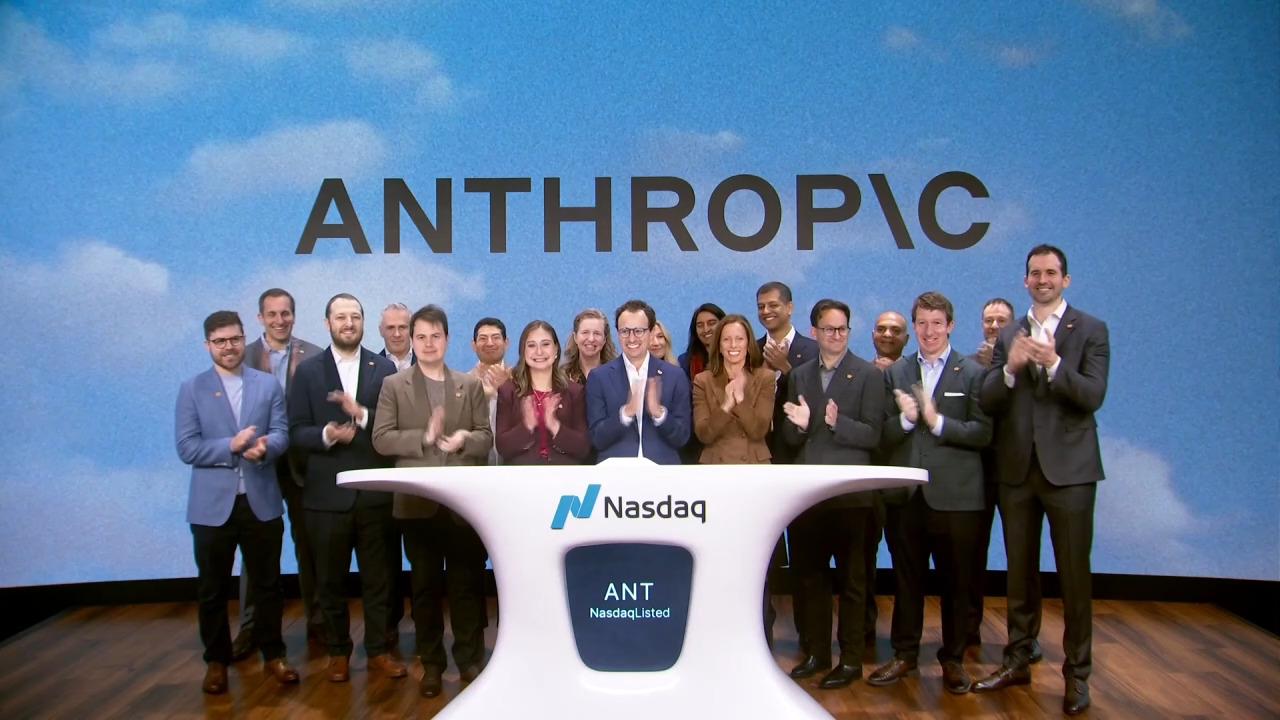
On 19 November 2026, Anthropic is scheduled to begin trading on the Nasdaq under the ticker symbol ANT. The IPO values Anthropic at approximately $1.5 trillion, based on an offering price of $83 per share.
The initial public offering of Anthropic represents one of the most significant financial events in the artificial intelligence industry. The company behind Claude is entering the stock market with extraordinary growth prospects, substantial commercial ambitions and access to some of the world’s largest technology companies. However, beneath the enthusiasm surrounding its technological achievements lies a financial structure that deserves particularly careful scrutiny. The central issue is not simply whether Anthropic can become one of the world’s leading AI companies, but whether it can finance its expansion, meet its enormous infrastructure commitments and ultimately generate profits sufficient to justify its valuation.
Anthropic was founded in 2021 by former OpenAI executives and researchers, with the stated objective of developing advanced artificial intelligence safely and responsibly. Its Claude models have rapidly established themselves in enterprise applications, software development, programming, research and business automation. Its commercial strategy is based primarily on consumption-based payments, whereby customers pay according to their use of computing intelligence, supplemented by subscriptions and enterprise agreements. This model offers considerable potential because revenue can increase as customers integrate Claude more deeply into their operations.
The company’s commercial expansion has been exceptional. According to its IPO disclosures and financial reporting, revenue reached approximately $16.96 billion in the third quarter of 2026, compared with $11.56 billion in the second quarter, representing sequential growth of approximately 47%. Nevertheless, this represents a considerable slowdown from the 144% quarterly growth reported in the second quarter. The distinction matters because investors are valuing Anthropic on the assumption that its expansion will continue at an extraordinary pace. Even a business growing rapidly can encounter difficulties if its infrastructure costs increase faster than its revenues.
The profitability figures are considerably less reassuring. In third-quarter net loss of approximately $23.29 billion, compared with $66.3 billion in the previous quarter, alongside an operating loss of approximately $567 million. The company’s SEC prospectus separately reports a cumulative net loss of $104.039 billion for the nine months ending September 30, 2026. These figures should not be confused: the quarterly results and the nine-month financial statements cover different reporting periods and accounting presentations. A particularly important factor is the substantial non-cash impact of changes in the fair value of convertible financial instruments. The prospectus identifies approximately $94.3 billion of such changes during the first nine months of 2026. Consequently, the headline net loss does not represent an equivalent amount of cash consumed by ordinary business operations. Nevertheless, the underlying operating economics remain challenging, especially given the costs of research, infrastructure and serving customers.
The most important financial issue, however, is the distinction between actual debt and future contractual obligations. According to the final SEC prospectus dated November 18, 2026, Anthropic had $6.2 billion in outstanding indebtedness as of September 30, 2026. This amount represents the aggregate principal outstanding under convertible promissory notes issued to Amazon through Amazon Web Services. These notes are expected to be settled in shares rather than cash. Therefore, the $6.2 billion is the correct figure for reported outstanding principal debt, not $130.5 billion or $900.9 billion. The company also has a $15 billion senior secured revolving credit facility, of which $14.8 billion was available at the September reporting date.
The figure of $130.502 billion appearing in the balance sheet requires a separate explanation. It represents the accounting carrying value of convertible notes payable, measured at fair value, rather than additional conventional borrowing of that amount. Changes in the estimated value of these instruments have generated substantial non-cash accounting losses. The distinction is essential when assessing Anthropic’s financial position: the company has $6.2 billion of outstanding principal debt, but its accounting liabilities associated with convertible instruments are considerably higher. These figures must not be added together as though they represented separate borrowings.
The real financial challenge, however, lies elsewhere: in the extraordinary scale of Anthropic’s future computing and infrastructure commitments. The final prospectus discloses approximately $900.9 billion in aggregate committed spending, substantially all related to computing capacity, data centres, infrastructure and associated leases. This is the most important figure in understanding the company’s long-term financial exposure. It is not conventional financial debt, nor is it an amount immediately payable. It is a combination of contractual purchase commitments, lease agreements, short-term arrangements and leases that have not yet commenced. Nevertheless, these commitments represent substantial future financial obligations that will require financing.
The timing of these expenditures is particularly significant. Approximately $451.6 billion is expected to be incurred before December 31, 2030, while substantially all of the remainder is expected between 2031 and 2045. Approximately $70.7 billion is due within the twelve months following September 30, 2026. The company also estimates an additional $150–175 billion in payments under certain computing and infrastructure arrangements that do not specify fixed monetary commitments. These additional estimated payments are excluded from the $900.9 billion headline figure and should therefore not be presented as already fixed contractual debt.
There are mitigating factors. Approximately $186.2 billion of the disclosed commitments are subject to termination rights or conditions that must be satisfied before commencement, including the ability of counterparties to secure financing, facilities or regulatory approvals. This means that not every dollar of the headline commitment necessarily represents an unconditional future payment. Anthropic also argues that its Anthropic Direct infrastructure strategy provides greater flexibility by securing data-centre capacity while allowing it to defer some accelerator purchases until computing requirements become clearer. Nevertheless, the company’s dependence on suppliers, infrastructure developers and external financing remains substantial.
The liquidity position is stronger than the headline debt and commitment figures might initially suggest. As of September 30, 2026, Anthropic reported $146.6 billion in available liquidity, consisting of $95.6 billion in cash and cash equivalents, $36.3 billion in short-term investments and $14.8 billion of available credit under its revolving facility. These figures are pre-IPO and pre-private-placement amounts. The company also disclosed up to $77 billion in available financing capacity under arrangements with strategic partners and up to $5 billion in equity commitments, subject to the adjustments as described in the prospectus.
The IPO and accompanying private placement are intended to strengthen this position considerably. Anthropic priced its public offering at $83 per share, with 980 million Class A shares offered. The total gross offering value is approximately $81.34 billion. Of this amount, 956,351,354 shares are being sold by Anthropic itself, generating approximately $78.84 billion before expenses, while 23,648,646 shares are being sold by existing shareholders, generating approximately $1.95 billion for those shareholders rather than the company. The underwriters also have an option to purchase up to another 147 million shares.
Alongside the IPO, Anthropic has arranged a $26 billion private placement of Class N shares with strategic technology partners, including AMD, Broadcom, Google, Micron, Microsoft, NVIDIA and TSMC Partners. These shares have economic rights but generally no voting rights. The company estimates that the combined net proceeds from the public offering and private placement will be approximately $104.8 billion, after underwriting discounts and estimated expenses. This capital injection is particularly important because it allows Anthropic to finance its expansion without relying exclusively on additional borrowing. However, it does not eliminate the enormous future expenditure commitments already disclosed.
The investment case therefore contains several potentially attractive elements. Anthropic has established a strong position in the enterprise AI market, and its products are increasingly integrated into business operations. Its consumption-based business model provides opportunities to generate additional revenue as customers increase their use of Claude. The company also benefits from relationships with major technology providers, access to advanced computing infrastructure and a rapidly expanding market. If AI adoption continues and the company improves its computing efficiency, its operating margins could eventually improve substantially. The IPO also gives it access to public capital markets, potentially reducing its dependence on private financing.
However, these advantages are accompanied by considerable risks. Competition from OpenAI and other AI developers is intense. Technological leadership can change quickly, and the development of increasingly sophisticated models requires continuous research expenditure and access to increasingly powerful computing resources. A competitor offering comparable capabilities at lower prices could undermine Anthropic’s pricing power. Equally, if corporate customers discover that the productivity improvements generated by AI do not justify the costs, demand could grow more slowly than anticipated. In that scenario, the company could be left with infrastructure commitments negotiated during a period of exceptionally optimistic demand expectations.
Another significant risk concerns the concentration of financial and commercial relationships. Amazon and Google are important infrastructure providers and strategic partners, while other major technology companies participate in financing and infrastructure arrangements. Such relationships provide Anthropic with resources that would otherwise be difficult to obtain, but they also create dependencies. The company itself acknowledges that the availability and timing of contracted infrastructure can be affected by counterparties’ ability to obtain financing, complete facilities and satisfy regulatory requirements. Delays, increased costs or changes in financing conditions could have a direct impact on Anthropic’s expansion plans.
Corporate governance is another important consideration for prospective shareholders. Anthropic is incorporated as a Delaware public benefit corporation, meaning that it must balance shareholder interests with its stated objective of developing advanced artificial intelligence responsibly for the long-term benefit of humanity. Its Long-Term Benefit Trust has the authority, through Class T shares, to elect and remove directors who collectively constitute a majority of the authorized board. In addition, the founders’ special Class F share carries 50.1% of the total voting power on ordinary shareholder matters. Public investors therefore acquire an economic interest in the company without obtaining proportionate control over its strategic direction. This structure may protect Anthropic’s founding mission, but it also limits the influence of ordinary shareholders over management and corporate decisions.
Valuation is perhaps the final and most difficult issue. The $83 IPO price reflects enormous expectations concerning the future of artificial intelligence and Anthropic’s ability to become one of the dominant companies in the sector. Investors are effectively paying for future technological leadership, market penetration and profitability rather than for an established record of sustainable earnings. The company’s substantial accounting losses, infrastructure commitments and dependence on continued capital availability make conventional valuation comparisons particularly difficult. A successful IPO does not necessarily mean that the shares are attractively priced, just as a successful business does not automatically represent a successful investment at any valuation.
Ultimately, Anthropic’s IPO presents a fundamental paradox. The company has demonstrated exceptional commercial growth, attracted major strategic partners and secured access to extraordinary amounts of capital. Its technology may become an essential component of the global economy. Yet its financial model requires investments on a scale that few companies have ever attempted, and its ability to convert revenue growth into sustainable cash generation remains uncertain.
The financial figures should be understood in their correct proportions: $6.2 billion in outstanding principal debt, $130.502 billion in accounting carrying value for convertible notes payable, $146.6 billion in pre-IPO liquidity, approximately $900.9 billion in committed future spending and a further estimated $150–175 billion in variable infrastructure payments not included in that commitment total. These amounts describe different financial concepts and cannot simply be added together. Nevertheless, taken collectively, they demonstrate the extraordinary scale of Anthropic’s financial exposure.
The decisive question is whether the company can transform its technological success into sufficient recurring revenue and free cash flow to finance its infrastructure obligations over the coming years. The IPO and private placement provide a substantial financial cushion, but they do not guarantee that future revenues will justify the enormous commitments made today. The company must continue growing, improve the efficiency of its computing infrastructure, maintain its competitive position and secure the financing necessary to meet obligations extending as far as 2045.
The conclusion is that Anthropic represents one of the most promising technological opportunities of the current era, but its investment proposition is far from straightforward. The potential benefits are uncertain, the competitive and financial risks are substantial, and the infrastructure commitments are already clearly documented. The company’s actual debt is not $900 billion, but the scale of its future contractual spending is arguably a much more important source of concern. Investors are not simply buying shares in an artificial intelligence company; they are financing an enormous long-term technological wager whose ultimate profitability has yet to be demonstrated. The mountain of commitments, rather than the conventional debt figure alone, is the central issue that enthusiasm surrounding artificial intelligence must not obscure.